Last updated: 4 September 2026
1Introduction
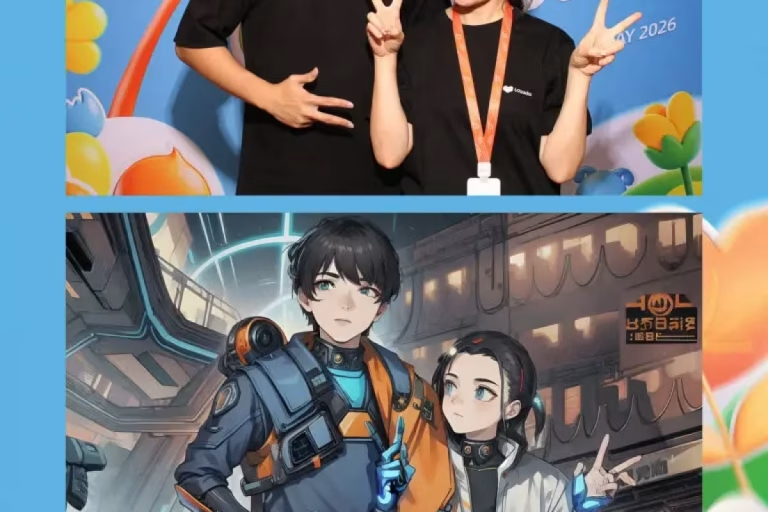
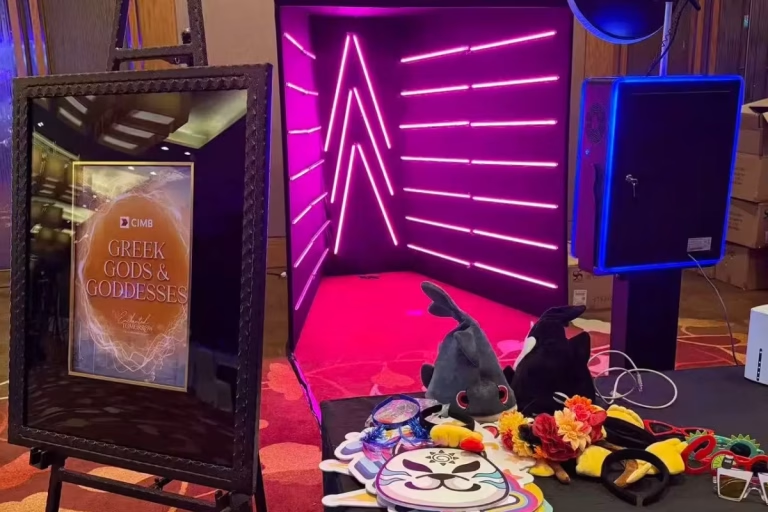
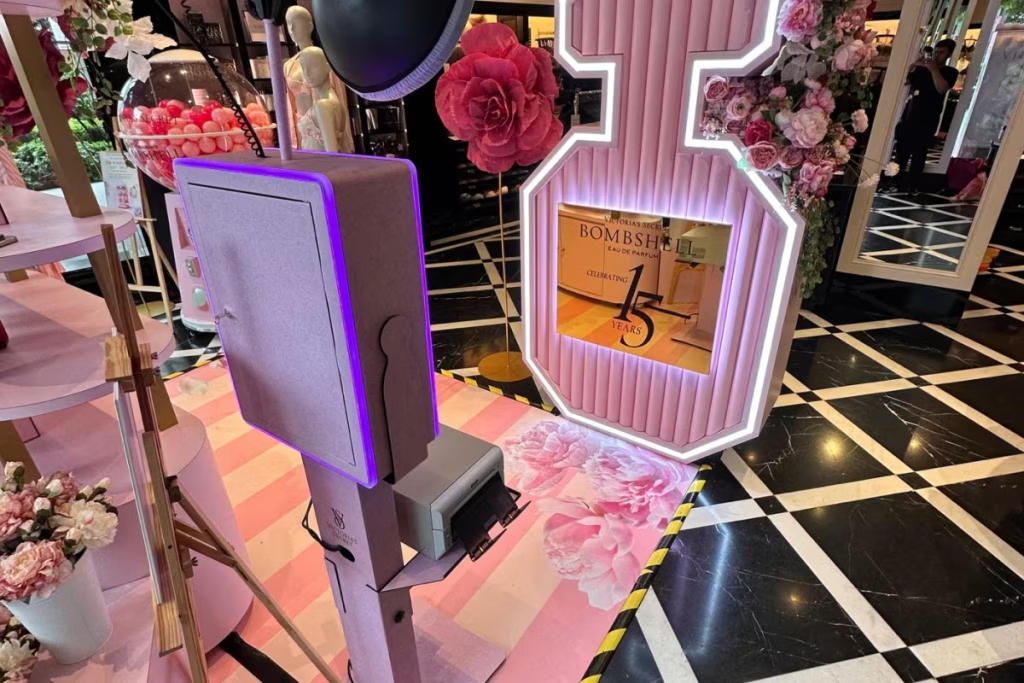
Quick Answer: An AI photo booth activation gives guests a transformed portrait they want to keep. Its value to the brand depends entirely on whether the brand survives the transformation.
An AI photo booth activation has become the default request from brands, and most of the disappointment comes from one misunderstanding.
A generative model does not reproduce, it reinterprets. Give it your logo and it returns something logo shaped. Give it your product and it returns a plausible object that is not quite your product.
For a guest, that is a curiosity. For a brand manager reviewing two hundred images before they go anywhere near a campaign, it is unusable.
The fix is a design decision rather than a budget one, and everything else in this guide follows from it.
Watch: what brands are actually asking for from activations now
Views from the floor of an experiential marketing summit this year, including where AI sits in brand activations and what audiences respond to.
Source: TentCraft
2Transform the guest, protect the brand
Quick Answer: Split the output into two layers. The AI handles the person. A fixed template carries the logo, the campaign line, the colours and any product image, composited after the render.
This one rule solves most of the problems brands have with the format.
The generated layer is where the fun lives. A guest as a portrait, a figure, an illustrated character, whatever the concept calls for.
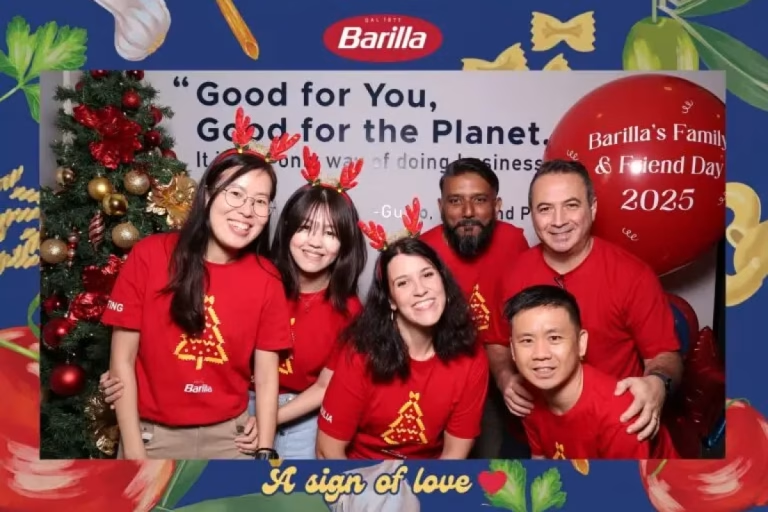
The fixed layer is where the brand lives. Real type, the correct logo file, the exact hex values from the brand guidelines, laid over the image afterwards rather than described to a model.
That layer is also what makes two hundred images look like a campaign rather than two hundred unrelated pictures, which is usually the whole point of running the activation.
Ask any supplier to show you the split before you book. The proportion of the frame that is fixed is a direct measure of how much brand control you keep.
3Getting the product into the picture
Quick Answer: If the product is not visibly in the frame, the images are interchangeable with any other brand’s activation. Put it in physically or composite it, but never generate it.
This is the difference between an activation asset and a nice picture of a stranger.
The most reliable method is physical. The real product in the guest’s hands, in shot, lit properly, appears in every image without any software having an opinion about it.
The second method is compositing a real product photograph into the fixed layer, which works where handling the product is impractical.
What does not work is describing the product in a prompt. The result looks like the category rather than the item, and a marketing team will reject it immediately.
The same argument applies at a launch, where the embargo adds a timing constraint on top, and our guide to product launch booths works through how to handle both.
4The wait is the format’s real cost
Quick Answer: Every AI booth makes guests wait, and at an activation that wait is public. Either design something into it or choose a faster style, because an idle queue is what mall management notices.
This is the operational reality that concept decks leave out.
| Session length | Guests per hour | What it looks like on site |
|---|---|---|
| 30 seconds | About 90 | Constant movement, short queue |
| 60 seconds | About 50 | Steady queue, manageable |
| 2 minutes | About 25 | Visible queue, people leave |
| 3 minutes or more | Under 20 | Crowd control becomes an issue |
Illustrative planning model rather than measured ShutterPop data. Session length includes posing, choosing a style and delivery, not only the render.
The third and fourth rows are where activations get into trouble, because a stationary crowd in a mall concourse is a problem for the centre before it is a problem for you.
There are three honest answers. Choose a faster style, run two booths, or make the wait part of the experience with a visible render screen and a host who talks to people while they wait.
The third is often the best of them, because a screen showing images appearing recruits the people walking past, which is the same crowd effect our guide to mall roadshow activations describes.
5The one format that earns a contact honestly
Quick Answer: Because the render takes time, sending it to a guest afterwards is a genuine service rather than a pretext. That makes an AI booth the cleanest way to collect a consented contact.
Most booths ask for a phone number to justify collecting one, and guests know it.
An AI booth has a real reason. The image is not ready yet, so telling the guest where to send it is a service they are asking for rather than a toll on the way out.
That does not make the contact a marketing list. It makes the delivery ask honest, which is exactly what allows the separate marketing ask beside it to be honest too.
Keep them as two questions and measure the opt in rate on the second one, because that rate is a real signal about the activation rather than a vanity number.
The full approach, including what a suspiciously high opt in rate means, is in our guide to lead capture, consent and data.
6Measure assets, not impressions
Quick Answer: An activation should report sessions, people, usable images and consented contacts. Impressions are the number easiest to inflate and impossible to compare against anything else in the budget.
Reporting is where AI activations either justify their cost or quietly avoid the question.
The booth can count four things honestly: how many sessions ran, roughly how many people appeared, how many images were good enough to use, and how many contacts opted in.
The third of those is the interesting one for an AI booth specifically, because a generative format has a real reject rate and pretending otherwise makes the whole report suspect.
Divide the cost by usable assets and compare it against what a content shoot would have cost for the same number of images. That is a comparison a finance team recognises.
The full method, including cost per opted in contact, is in our guide to measuring activation ROI.
7Ideas that suit a brand rather than a party
Quick Answer: Concepts that put the guest inside the brand’s world, produce a consistent set, and give the guest a reason to keep the image rather than a reason to laugh once.
The best activation concepts have one thing in common: the guest keeps the picture because it flatters them, not because it is funny.
- The professional portrait, retouched lightly, which staff and visitors genuinely use afterwards.
- The brand world portrait, where a fixed illustrated setting carries the campaign and the guest is placed inside it.
- The collectible, such as a boxed figure with the product in the accessory slot.
- The era or heritage portrait, which suits anniversary campaigns and photographs well across all ages.
- The team set, where colleagues appear in one consistent style for internal use.
What all of them avoid is the transformation so extreme that the guest is unrecognisable, which is entertaining for one second and never shared.
Choose one concept and run it properly rather than offering five. A single strong style produces a coherent set of assets, and a menu produces a scatter of unrelated images.
8Novelty runs out faster than a campaign does
Quick Answer: An AI style that astonished people at the first roadshow stop is ordinary by the fourth. Plan a series around changing the concept rather than repeating it.
This is the trap for any brand running a tour, a mall series or an annual event.
The first activation is carried partly by surprise. By the third city, the audience has seen it, and the queue is shorter for reasons that have nothing to do with the execution.
Budget for a change of style or theme partway through a series, which usually costs artwork rather than equipment.
At an annual event the same applies across years. Repeating last year’s booth is the fastest way to make a good idea look tired.
The alternative is to make the fixed layer the constant and the generated concept the variable, so the campaign stays recognisable while the experience changes.
9Staffing an AI booth is a different job
Quick Answer: A generative booth needs a host rather than an operator. Someone has to manage expectations, handle the render that comes back wrong, and keep a queue of strangers in a public space engaged.
Brands budget for the equipment and treat the person standing next to it as an afterthought, which is backwards for this format.
An ordinary print booth largely runs itself. A guest presses a button, a picture appears, nobody needs anything explained.
A generative booth has a wait, a choice and an occasional failure, and each of those needs a person. Setting the expectation before the render is what stops the guest being disappointed by it.
At a mall or an exhibition the host is also doing the recruiting, which is a sales job rather than a technical one, and a salesperson pulled off the stand to run it is the most expensive way to fill that role.
Brief them on the three privacy answers as well, because that question is asked out loud at a public activation more often than at a private event.
10What to settle before you sign
Quick Answer: Six points that decide whether the activation produces usable assets or a folder nobody opens.
Put these in the brief rather than discovering them on site.
- The layer split, showing exactly which parts of the frame are generated and which are fixed.
- The product, physically in shot or composited from a real photograph.
- A timed full session, checked against expected footfall and the venue’s crowd rules.
- A visible render screen and a host, so the wait recruits rather than repels.
- Separate delivery and marketing questions, with the opt in rate reported.
- High resolution clean files for the brand, without the print border.
The last one is easy to forget and expensive to fix. The guest print and the campaign asset are different files, and asking for the clean version afterwards often means asking for something nobody saved.
Agree an approval route as well. Somebody has to decide which images the brand may publish, and doing that during the event is far cheaper than doing it a week later.
Planning an activation?
Send us the campaign, the venue and the expected footfall and we will design the layer split, time the session and size the queue before you commit. see our brand activation booths →
11Conclusion
Quick Answer: Let the AI transform the guest and nothing else, get the product physically into the frame, design for the queue, and report usable assets rather than impressions.
An AI photo booth activation is an excellent marketing tool and a poor brand tool if you let the model near the brand.
Keep the generated layer to the guest, keep the logo, the colours, the type and the product in a fixed layer, and you get images that are both surprising and on brand.
Then treat the wait as the main design problem, because at a public activation the queue is the thing the venue, the client and the passing audience all actually see.
For the wider category see our guide to AI photo booths in Malaysia, and for the questions a corporate client should ask about guest data, our guide to AI booth privacy. The full range is on the ShutterPop site.
12Frequently asked questions
Can an AI photo booth reproduce our logo accurately?
Not reliably, if the model is generating it. Keep the logo, brand colours and campaign type in a fixed layer composited over the generated image, which reproduces them exactly every time.
How do we get our product into the images?
Either physically, with the real product in the guest’s hands and in shot, or by compositing a real product photograph into the fixed layer. A product described in a prompt comes back looking like the category rather than the item.
How many guests can an AI booth handle at a mall activation?
It depends on the full session length. At around a minute per guest a single booth serves roughly fifty an hour, and anything above two minutes produces a visible queue that the centre will notice before you do.
What should an activation report to the client?
Sessions run, people appearing, images good enough to use and contacts who opted in. Cost per usable asset and cost per opted in contact are comparable against other budget lines, while impressions are not.
Can we run the same AI booth across a whole roadshow series?
You can, but expect the response to fall away as the audience becomes familiar with it. Keep the brand layer constant and change the generated concept partway through, which usually costs artwork rather than equipment.
Want an AI activation that produces usable assets?
Tell us the campaign, the venue and the dates. We will design the layer split so your brand survives the render, and size the booth to the footfall you expect.